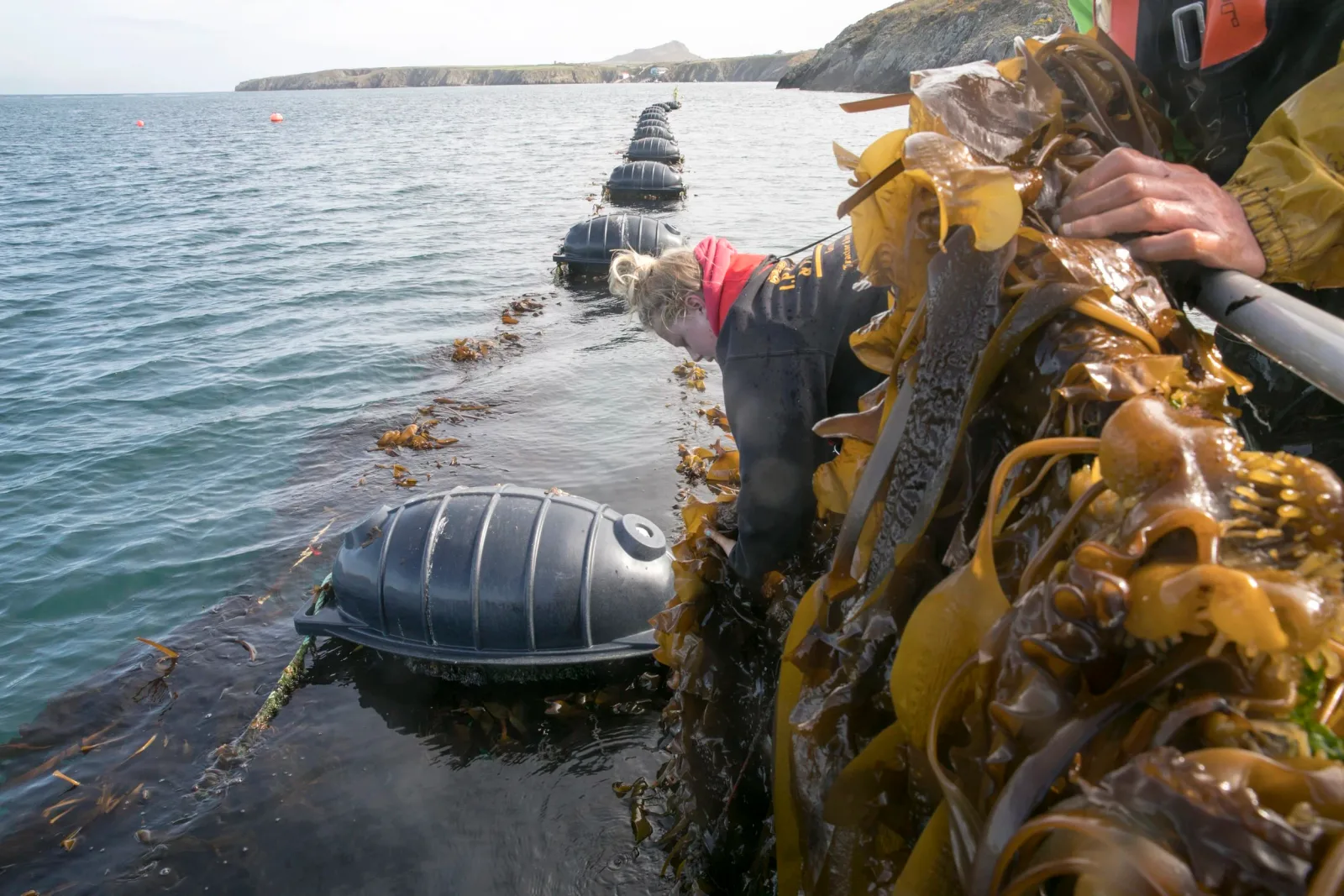
St Justinian, St Davids Peninsula, Pembrokeshire, Wales
Câr-y-Môr
“Regenerating the sea, restoring the soil, and putting nutritious Welsh produce back on the table.”
Kelp to crop
Câr-y-Môr grows seaweed and shellfish with no fertiliser, pesticide or added freshwater, then turns part of the harvest into a liquid seaweed biostimulant for land. Co-op Foundation funded trials cut synthetic fertiliser use by 40% while grass yield rose 29%, with further gains recorded on organic potatoes and silage. Profits are reinvested into the community-owned farm rather than paid out to shareholders, so a healthier seabed and healthier soil both feed back into the same 700-plus-member community.
Watch the farm
In Beth Marshall's words
From a PEBL interview, March 2026
- “We grow the seaweed on ropes in the sea and it absorbs nutrients from the water, using that to create long blades. We harvest it, bring it onto site, put it into big tanks with water and let it do its thing, and it turns into a liquid. We strain that out and give it to farmers, and they spray it on their fields.”
- “We make sure we're not damaging anything with our seaweed farming by monitoring with cameras on the seabed, comparing what's living underneath the farms to what's away from them, and seeing if there's an increase in biodiversity.”
How it started
Founded by Owen Haines, a third-generation fish farmer, together with his family, after growing frustrated with the chemicals and waste of conventional fish farming. Câr-y-Môr means 'for the love of the sea' in Welsh, and the farm became Wales' first community-owned regenerative ocean farm, registered as a Community Benefit Society in August 2019.
Who's behind it
- Beth Marshall · Marine Biologist
3 hectares, a Community Benefit Society with 700+ members
What they grow
Liquid seaweed biostimulant · Crab-shell soil amendment · Laverbread pesto and other seaweed food · Shellfish
Meet the other farms behind FishSpotter.
All six farms